Mux Announces General Availability of AI-Powered Video Processing Platform Mux Robots Alongside Major API v1 Release

The software development landscape has undergone a profound structural shift over the past eighteen months, transitioning from a paradigm where writing source code represented the primary constraint to one defined by product-market alignment and strategic clarity. In this new environment, artificial intelligence agents efficiently generate vast quantities of code on demand, shifting the engineering bottleneck toward defining exact product requirements and ensuring rigorous API design. Far from rendering traditional software engineering crafts obsolete, this automated workflow places a heightened premium on interface consistency. When coding agents interact with predictable, standardized endpoints, the margin for error decreases significantly, enabling automated systems to execute complex integrations flawlessly on the first attempt without manual intervention.
Capitalizing on this philosophical shift toward robust infrastructure design, video infrastructure provider Mux has officially announced the general availability (GA) of Mux Robots. Following an extensive technical preview phase that processed tens of millions of video minutes in real-world environments, the platform transitions to a fully supported production-ready status. This milestone release introduces a polished v1 application programming interface, two advanced automated workflows designed to streamline media metadata extraction, and a stabilized feature set engineered to provide developers and their autonomous coding agents with long-term reliability.
The Evolution of Mux Robots: From Technical Preview to Production GA
The journey toward general availability for Mux Robots began earlier this year with a targeted technical preview designed to gather empirical usage data and stress-test automated video processing algorithms against unpredictable real-world workloads. During this preview window, developers integrated the early iteration of the tool into diverse production pipelines, generating millions of minutes of analyzed video content. According to Mux engineering teams, the telemetry and feedback gathered during this period directly informed the architectural refinements implemented in the transition to GA.
Rather than treating the preview phase as a mere marketing exercise, Mux utilized the months between initial launch and general availability to iteratively tune workflows, adjust structural parameters, and eliminate friction points identified by active users. The resulting v1 API establishes a standardized, enterprise-grade foundation designed to guarantee that applications built today will maintain cross-quarter compatibility. This commitment to backward compatibility and stability ensures that both human engineers and AI-driven development agents can rely on predictable JSON schemas, uniform timestamp conventions utilizing exact seconds, and harmonized field naming conventions across the entire Mux Video ecosystem.
Comprehensive Overview of New Workflows: Analyze Structure and Generate Contextual Text
The general availability release introduces two powerful additions to the Mux Robots workflow catalog: analyze-structure and generate-contextual-text. These additions address specific enterprise requirements for deep media comprehension and multi-channel content distribution.
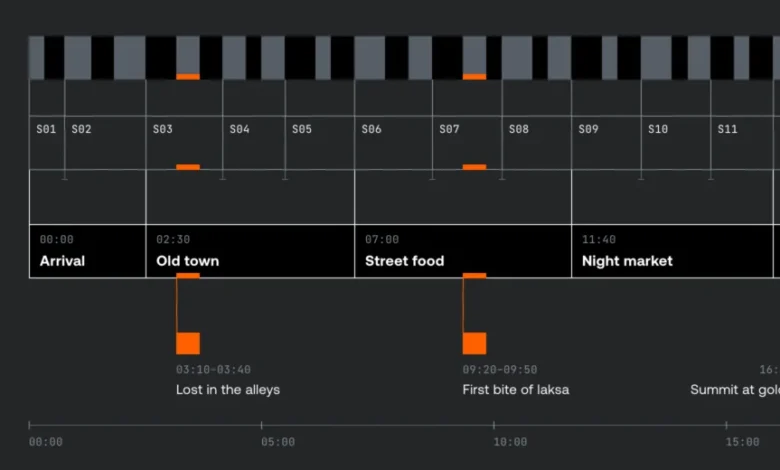
The analyze-structure workflow consolidates what previously required four independent processing jobs into a single, unified execution pass. Historically, applications needing a comprehensive understanding of a video file—such as titles, descriptive summaries, chapter markers, scene segmentation, and key moment highlights—had to invoke distinct workflows including summarize, generate-chapters, find-scenes, and find-key-moments. Each of these legacy jobs independently re-read the media file without sharing contextual awareness, leading to redundant processing overhead.
By contrast, analyze-structure processes the asset in a single pass, drawing from a shared internal pool of context to return titles, summaries, tags, chapters, scenes, and key moments simultaneously. Timestamps generated during this process are automatically aligned with precise shot boundaries detected by Mux’s core video processing engine. Furthermore, developers can configure the job to write title and chapter metadata directly back to the underlying media asset, eliminating the need for subsequent API round-trips before rendering interactive player controls. As part of this transition, the standalone find-scenes workflow is officially deprecated under API v1, though legacy support will remain active on the v0 endpoint for a transitional period of six months.
Complementing structural analysis, the new generate-contextual-text workflow directly responds to enterprise demand for scalable content marketing automation. While standard summarization tools efficiently generate basic descriptions, modern digital publishing workflows require diverse textual artifacts tailored to specific distribution channels and editorial angles. This workflow allows developers to ingest a single video asset and programmatically produce multi-channel deliverables, including social media posts, comprehensive blog entries, newsletter copy, and long-form summaries.
By establishing an authoritative editorial brief derived directly from the video’s transcript and visual frame data, generate-contextual-text prevents the generative models from hallucinating unverified claims or misrepresenting source material. Developers can define custom output steering parameters—specifying target audience demographics, brand voice, length caps, and specific calls to action—while requesting multiple thematic variants, such as promotional product-led angles versus educational insight-led perspectives.
Empowering Developers Through the Robots Playground and No-Code Prototyping
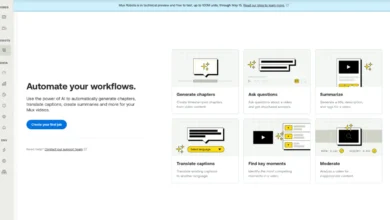
To lower the barrier to entry for teams evaluating automated video intelligence, Mux continues to invest heavily in the Robots Playground within the Mux dashboard. The interactive environment allows product managers and developers to select existing media assets, execute any workflow from the platform catalog, and inspect fully rendered visual outputs—ranging from navigable chapter lists and playable key moment clips to detailed content moderation evidence per thumbnail.
A standout capability of the Playground is its automated prompt generation engine. Every workflow test executed within the interface generates a copy-pasteable prompt tailored for coding agents. These prompts encapsulate both the exact API request structure and instructions on how the receiving application should handle and render the JSON response—such as converting chapter timestamps into clickable list items that dynamically seek the Mux Player. This bridge between no-code experimentation and AI-assisted software development significantly accelerates proof-of-concept timelines.
Strategic Implications and the Future Roadmap of Video Infrastructure
The general availability of Mux Robots arrives at a critical juncture in the evolution of cloud-native media processing. As organizations accumulate massive archives of unstructured video data, the ability to programmatically extract semantic meaning, automate editorial workflows, and index content for programmatic discovery has transitioned from an experimental luxury to a core business requirement.
Industry analysts note that platforms combining strict API stability with advanced machine learning capabilities are uniquely positioned to capture market share as enterprises scale their internal AI tooling. By ensuring that its infrastructure accommodates both traditional software engineering pipelines and autonomous agentic workflows, Mux is establishing a standardized protocol for programmatic video intelligence.
Looking ahead, Mux leadership has indicated that the general availability label signifies architectural stability rather than feature completion. The company’s near-term roadmap focuses heavily on advanced multimodal search capabilities, leveraging internal embeddings to enable semantic natural-language queries across vast video libraries—allowing systems to execute queries such as retrieving every scene where a specific physical action occurs. As development teams begin integrating Mux Robots v1 into production environments, the company continues to solicit user feedback through its support channels to guide the next generation of video processing capabilities.
Related posts: